Anchoring brand strategy to accelerate growth
Written by
Getting brand strategy and business strategy to work together across an organisation is one of the strongest levers for brand-driven growth. Recent Gartner research shows that organisations with aligned brand and business strategies are twice as likely to meet their growth goals.¹ Yet brand strategy is still routinely pushed to the periphery, despite the risk of inconsistency. Now, with AI-driven brand discovery, that disconnect carries a steeper price than ever. Inconsistency no longer just dilutes how a brand is perceived, but determines whether it shows up at all. That is why brand strategy belongs at the centre of the organisation, not at its edges.
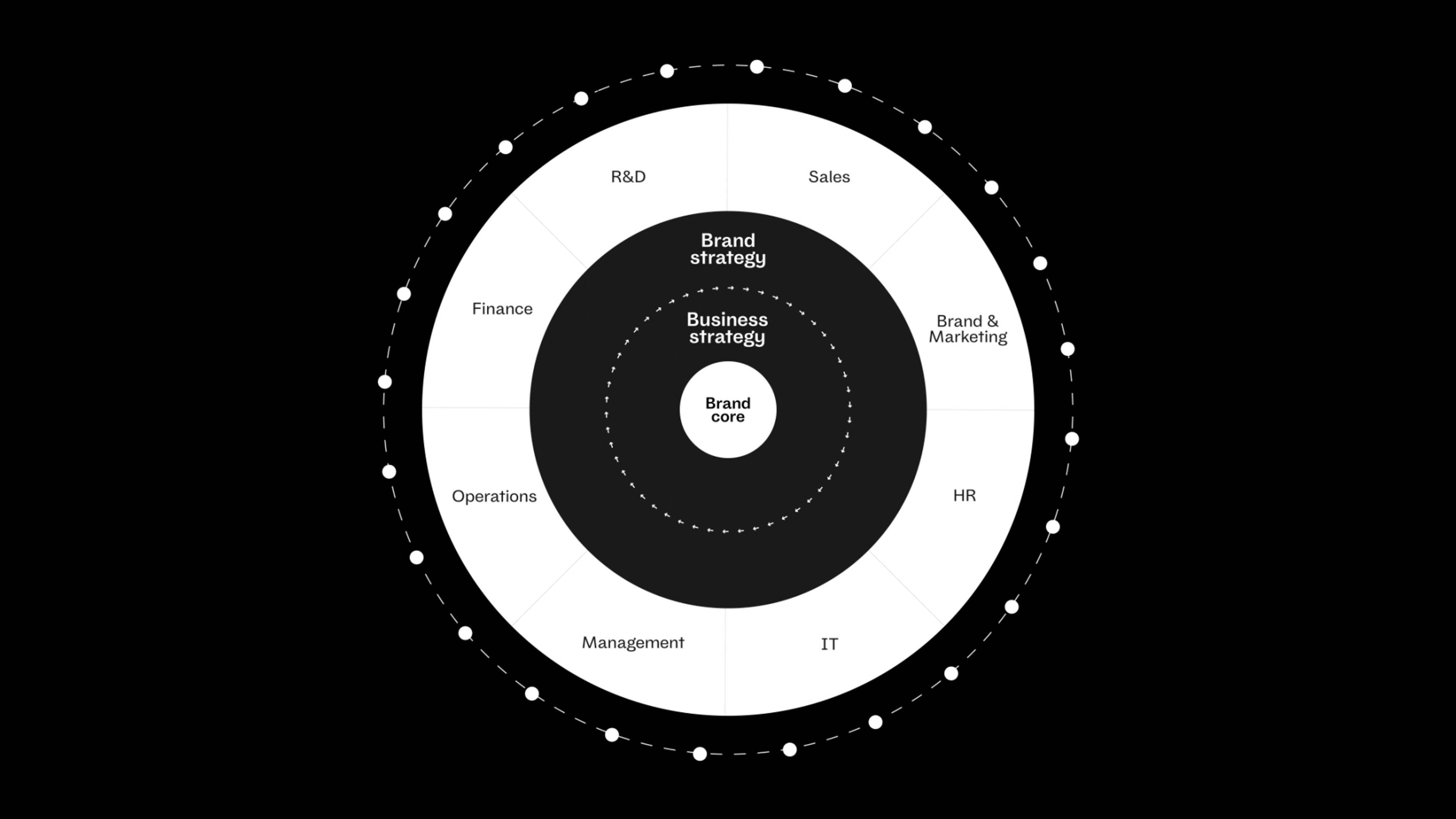
Business strategy has long held a natural place at the centre of organisations. It’s set by management and translated into targets and priorities that span teams and departments. While business strategy explains what to achieve and why, brand strategy explains how to make the value we want to create tangible; it’s about how to present it to the right audiences in a way they recognise and remember. When the two work in tandem, it shows up in the numbers. Beyond doubling overall growth odds, Gartner research shows aligned organisations are 3.3 times more likely to exceed marketing campaign targets and 1.6 times more likely to outperform objectives in other functions.²
The Governance and Value Gap
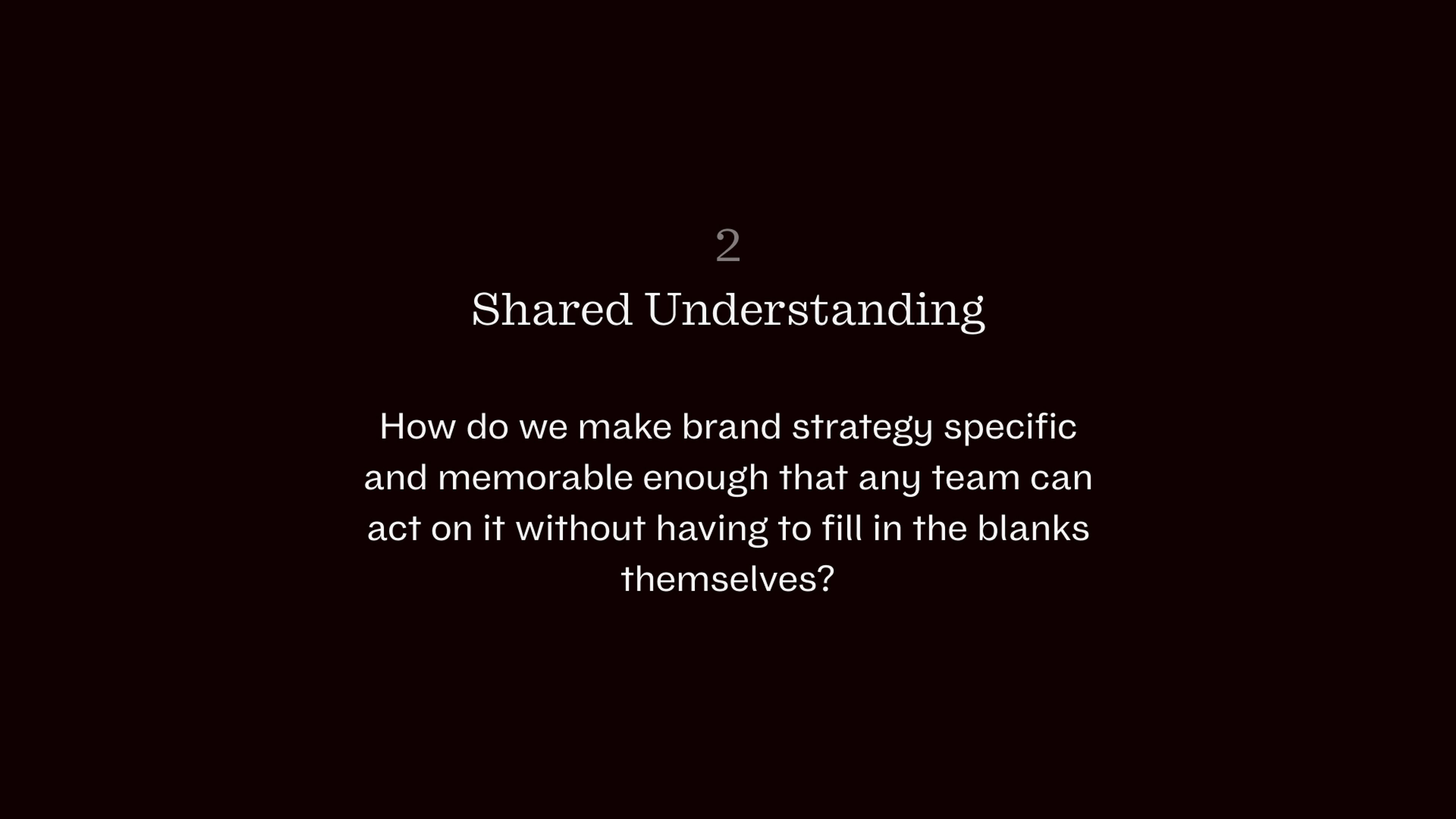
Still, brand strategy mostly sits with brand and marketing and rarely reaches the rest of the organisation in the same way. But what the market meets is not written by brand and marketing alone. Everything the organisation sends into the world shapes the brand, deliberately or not. It’s the support reply, the product documentation, the job ad, and the sales conversation. It’s not that those teams ignore the brand strategy, but unless they are made properly aware of the positioning, the principles behind it, and how it should impact their business area, they’re left to fill in the blanks themselves. The gap between where a brand is governed and all the places it is shaped is no longer just an internal inefficiency, as multiple interpretations quickly lead to inconsistency.
Historically, that inconsistency has been largely a perception problem, and its impact is an erosion of mental availability. Brands are remembered and chosen when they are distinctive, relevant, and consistent enough for people to form a stable memory structure around their value. Everything deviating from the brand’s positioning makes those structures harder to build, and a brand that is hard to hold in mind is easy to leave out of consideration. That is the classic argument for anchoring.
“
A brand that is hard to hold in mind is easy to leave out of consideration.
But today, it’s more nuanced. With AI-based brand discovery, that same inconsistency is increasingly becoming a visibility problem, too. When someone asks an AI to solve a need, your brand’s visibility is largely decided by what independent sources say about you — sources that are a direct consequence of everything your organisation does. LLMs do not weigh those sources one by one; they look for agreement across them. When independent sources describe you in the same terms, the brand reads as authoritative and safer to recommend. When they describe you differently, the models have no consistent claim to stand behind, so they reach for a competitor whose evidence is clearer. Inconsistency, in other words, is read as uncertainty, and uncertainty is a risk the model simply passes on.
Brand Strategy as an Operating System
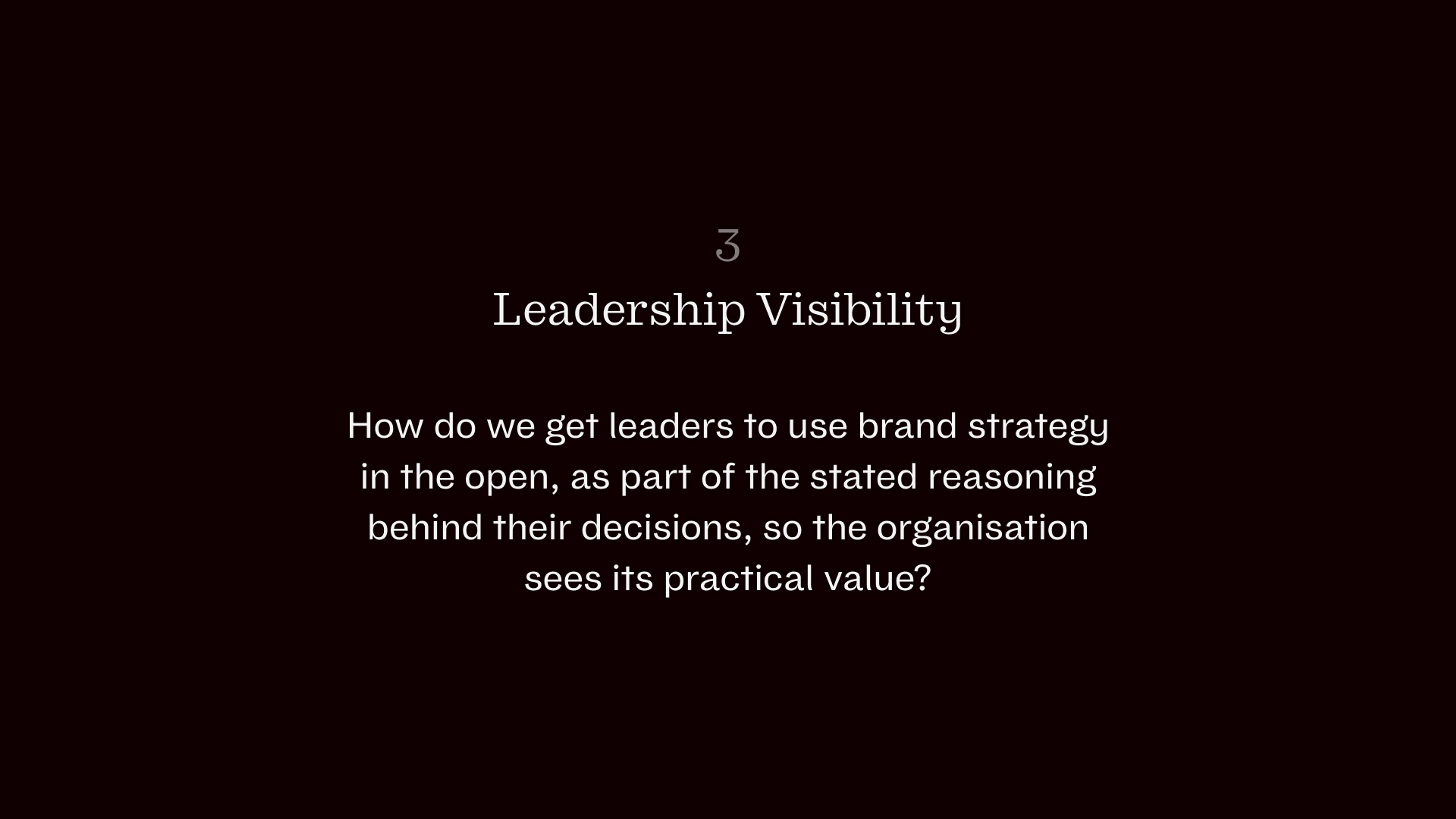
Closing this gap through brand strategy anchoring is not a matter of tighter guidelines. It requires brand strategy to function as a shared operating system alongside business strategy, with the same reach into every department. When every division has the clarity to judge what it puts into the world, brand and marketing can move from enforcing rules to holding the strategic mandate.
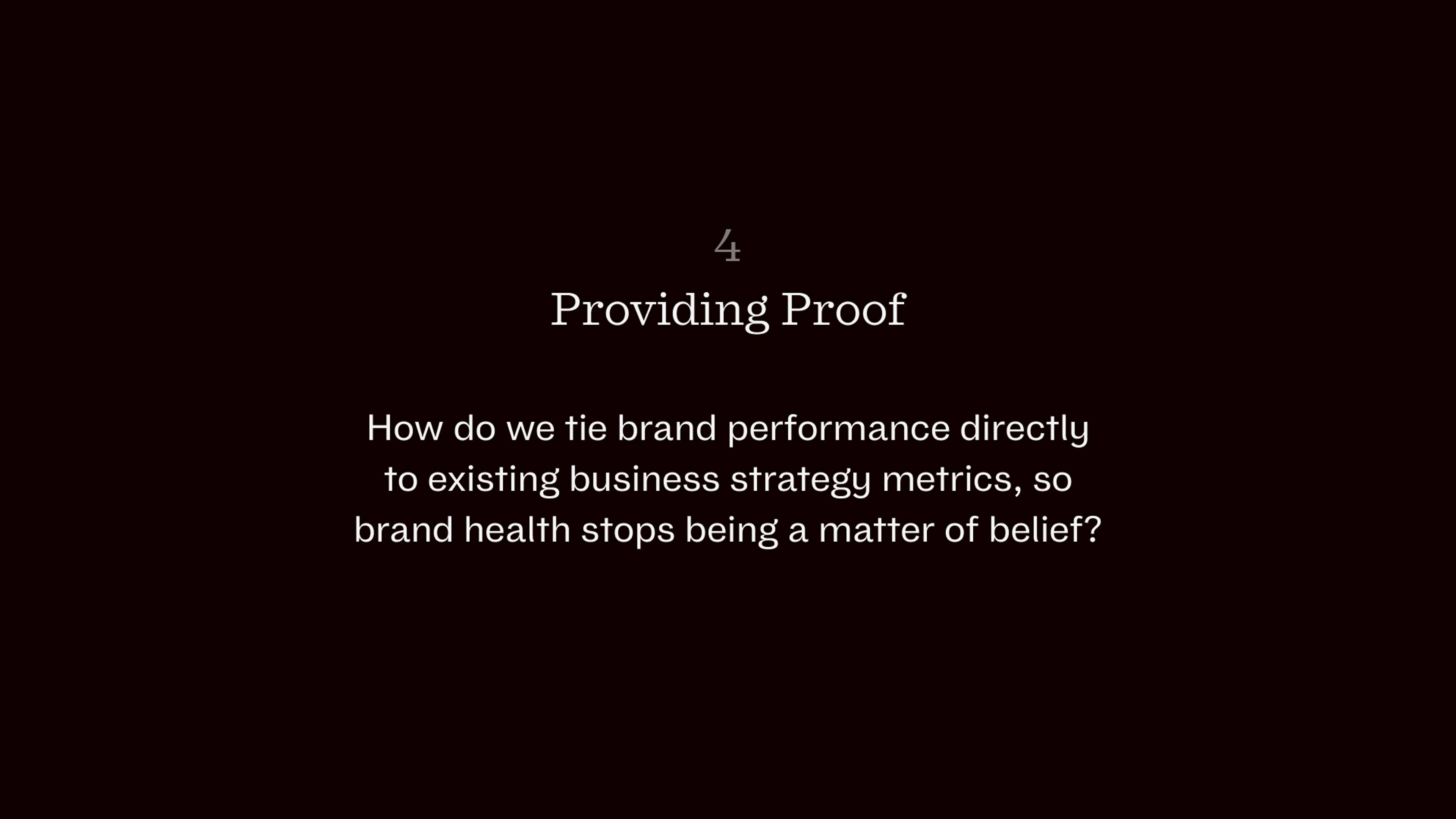
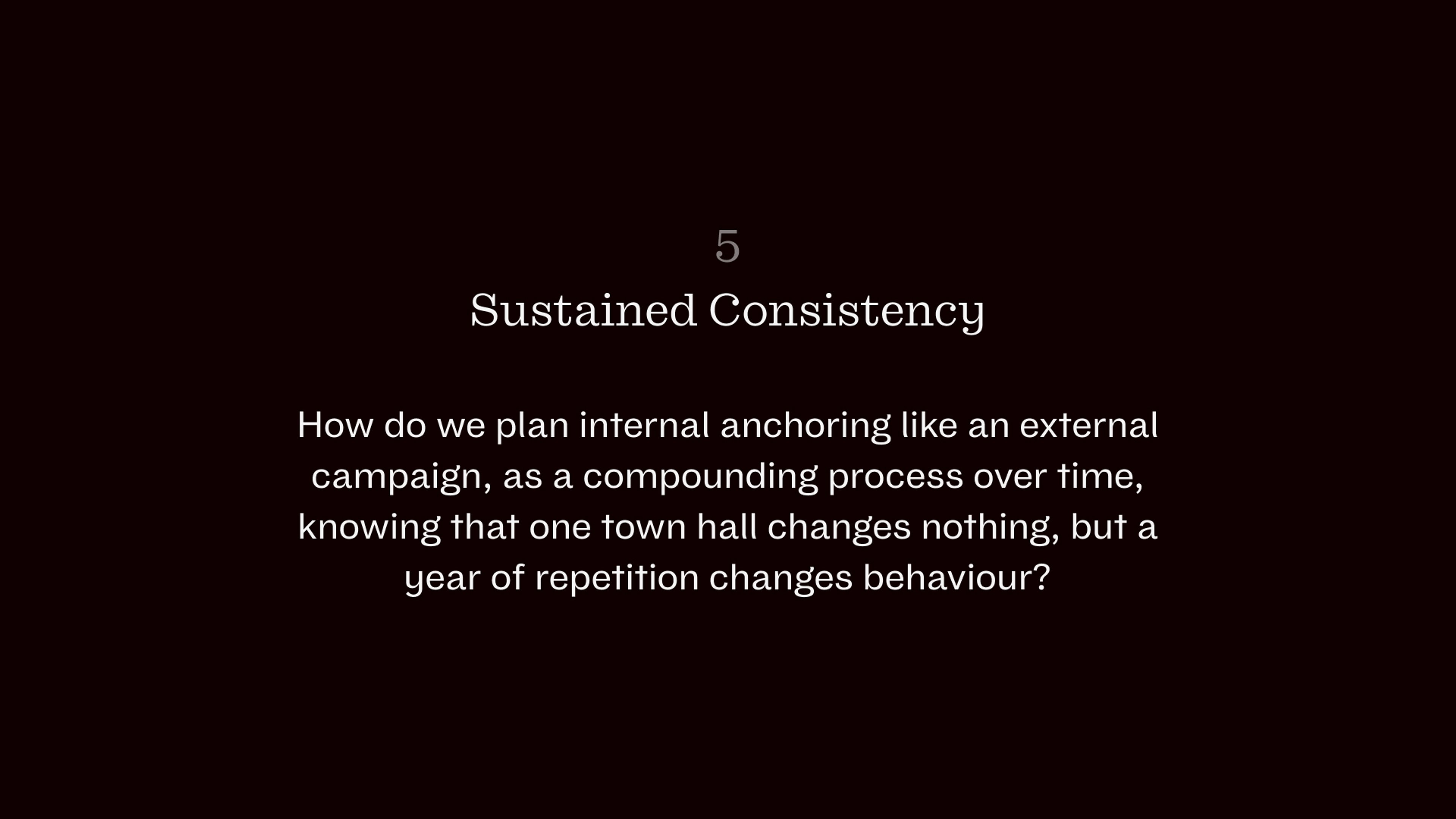
In practice, bringing brand strategy to the centre starts with asking five core questions:

Controls space
Controls space
Controls space
Controls space
Controls space
 /
/ 
Brand-driven growth never comes from brand strategy operating in isolation. It happens when leadership treats brand strategy as a shared operating system, demanding the same rigor as the business strategy itself.
When brand strategy is anchored at the core, consistency stops being a rule marketing has to enforce. It becomes the natural by-product of how the entire organisation works. And that is what transforms brand strategy into a true lever for growth.
¹˒ ² [https://www.gartner.com/en/articles/brand-strategy]
Looking to level up your brand? Don't hesitate to reach out.